American Encaustic Tiling Company: The Giant of Zanesville
For a generation, the largest tile works in the world sat in a small Ohio city on the Muskingum River. Its name is stamped on the back of more American architectural tile than any other, and it turns up, still, in fireplaces and vestibules and demolition piles from coast to coast: the American Encaustic Tiling Company.
From New York to Zanesville
The company was founded in New York in 1875, at a moment when America imported nearly all of its decorative tile from England. Its first glazed tiles came in 1880, embossed relief tiles the year after. Production soon moved west to Zanesville, Ohio — already a pottery town — where a vast new works rose in the early 1890s and all but tripled the town’s size as workers poured in. By 1890 American Encaustic was the largest tile manufacturer in the world.
Everything, at scale
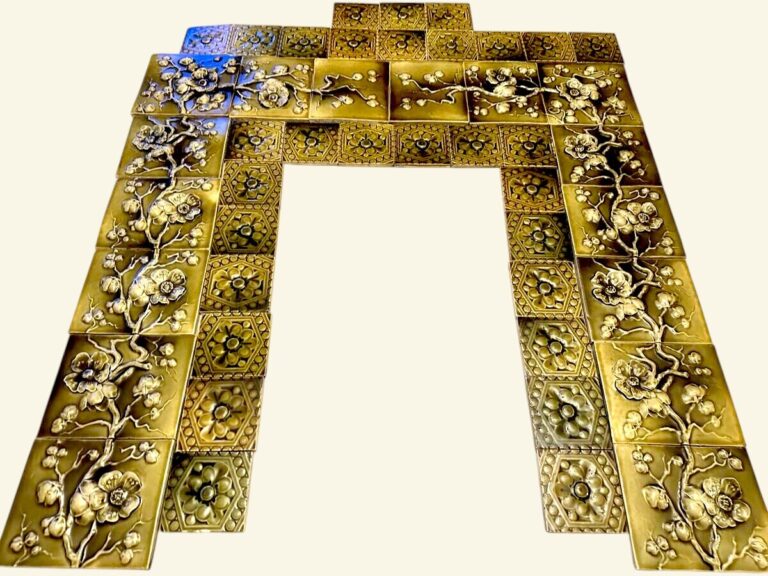
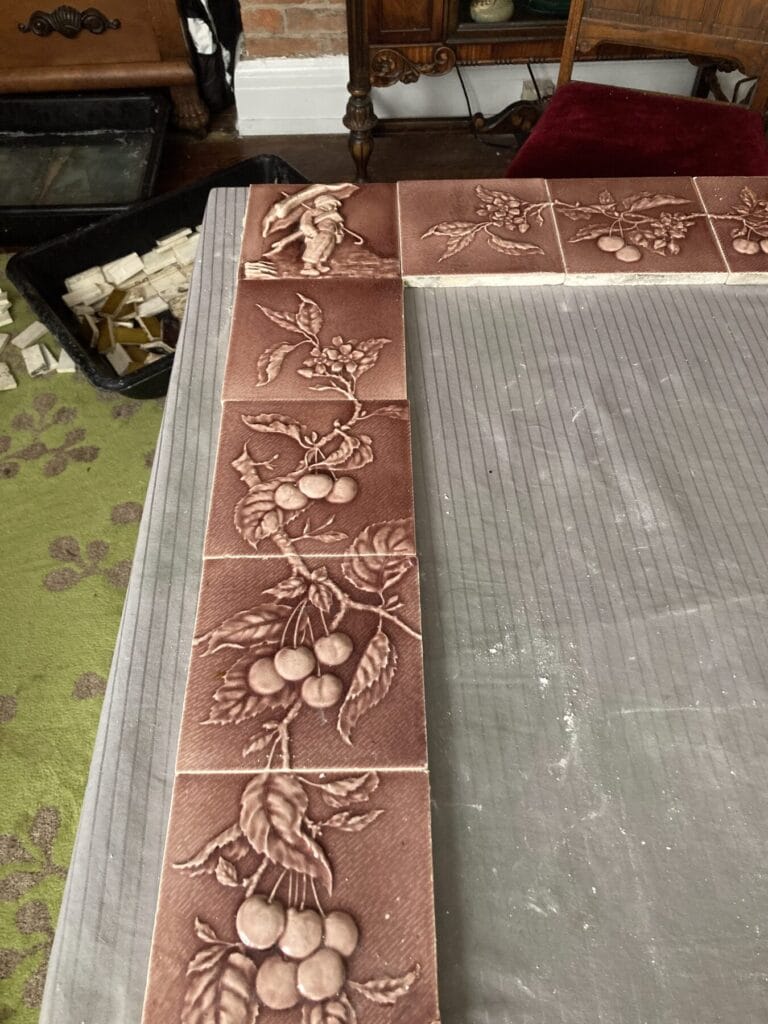
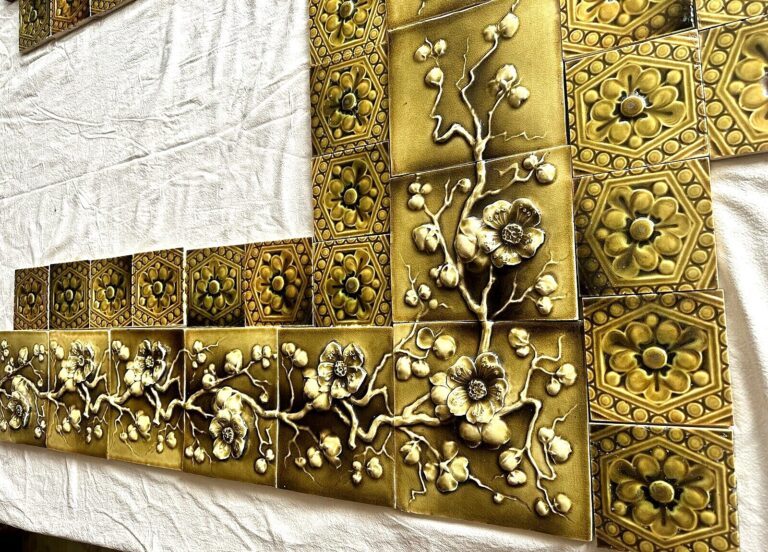
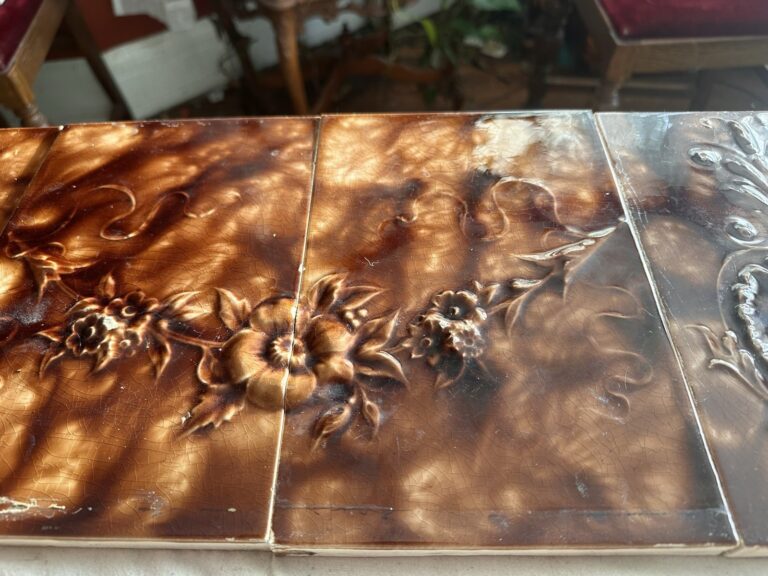
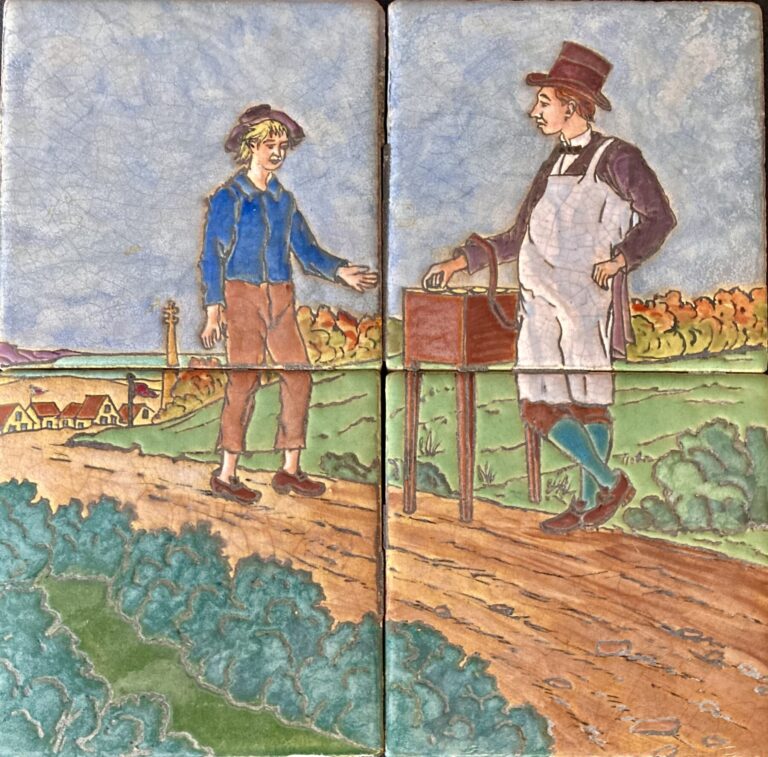
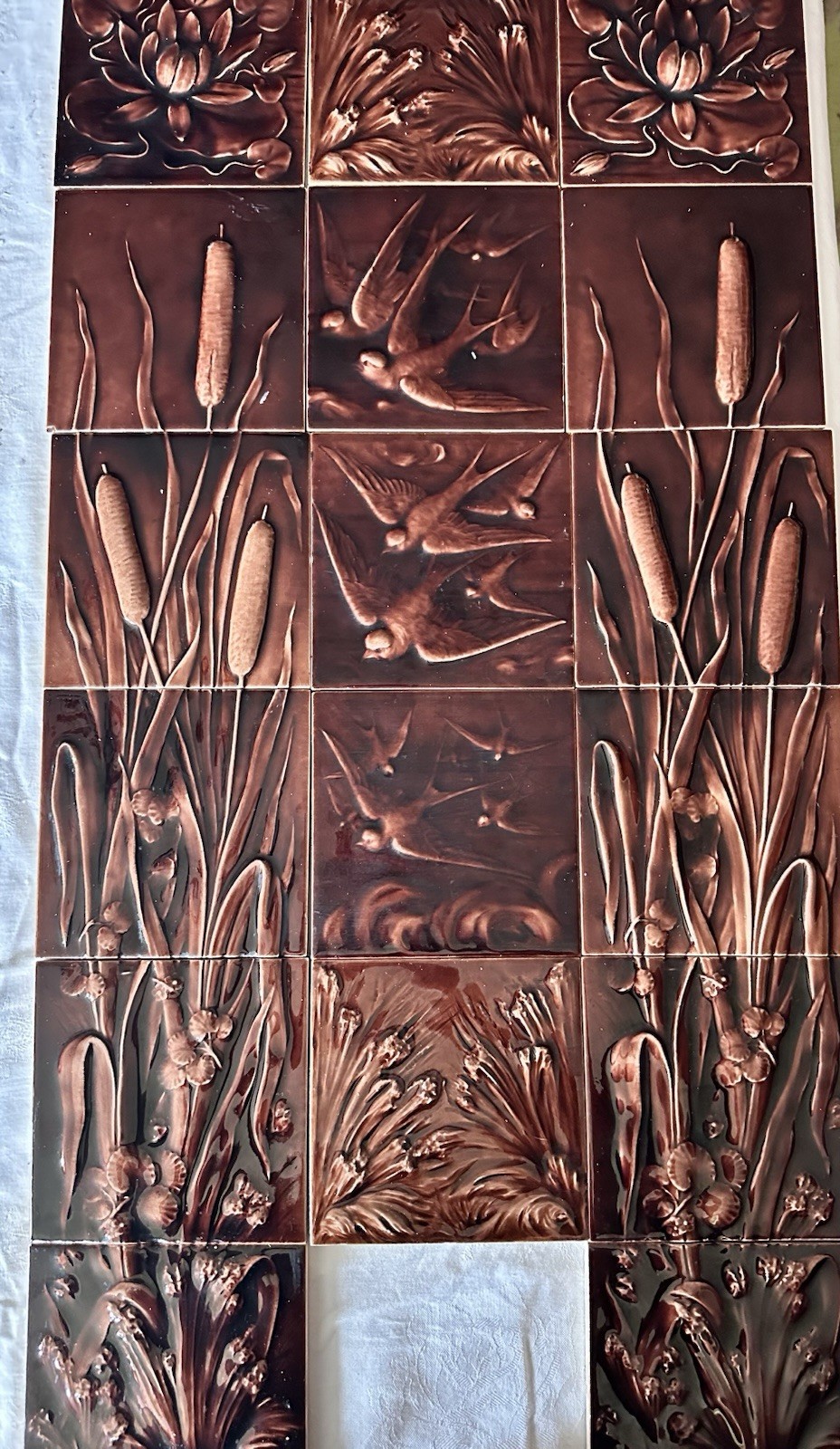
AETCo made the whole range: unglazed encaustic and geometric floor mosaic for entryways and vestibules, plain and ornamental wall tile by the acre, and the decorative art tile that collectors chase today — relief panels, majolica, and hand-painted faience in the cuerda-seca technique that faced theaters and schoolhouses. Few makers could match either its volume or its versatility.
The talent it drew
A company that large could hire the best minds of the trade, and it did. The chemist Karl Langenbeck ran its glaze work; the German-trained sculptor Herman Carl Mueller modeled much of its finest figural relief in the years around 1887–1894 before the two left together to found the Mosaic Tile Company nearby; and the celebrated potter Frederick Hurten Rhead — later the designer of Fiesta ware — passed through as well. The hands behind AETCo art tile were, often, the most gifted in America.
Marks & identification
Genuine pieces usually carry an impressed mark on the back — commonly “AETCo” or the fuller “American Encaustic Tiling Co., Limited, New York,” sometimes with a globe or monogram device. The clay body is typically a buff, high-fired stoneware. Because the company marked its work so consistently, an AETCo tile is usually one of the more confidently attributed pieces a collector will meet.
The end
Unlike rivals who branched into pottery and dinnerware, American Encaustic stayed a tile company — and when the Depression came, it had nothing to fall back on. The firm went bankrupt and the Zanesville plant closed in 1935, ending sixty years at the top of the American tile trade. What it left behind is everywhere, and much of it is very good indeed.
Relic Asylum — Tiles with past lives.