The Modelers: The Artists Who Moved from Shop to Shop
The companies get the credit — the marks on the back read Low, or AETCo, or Mosaic — but the tiles were made by people, and the best of those people did not stay put. A handful of gifted modelers and chemists moved from shop to shop across the American tile boom, carrying their hands and their formulas with them, and you can trace the whole era by following where they went.
Arthur Osborne — the hand behind Low
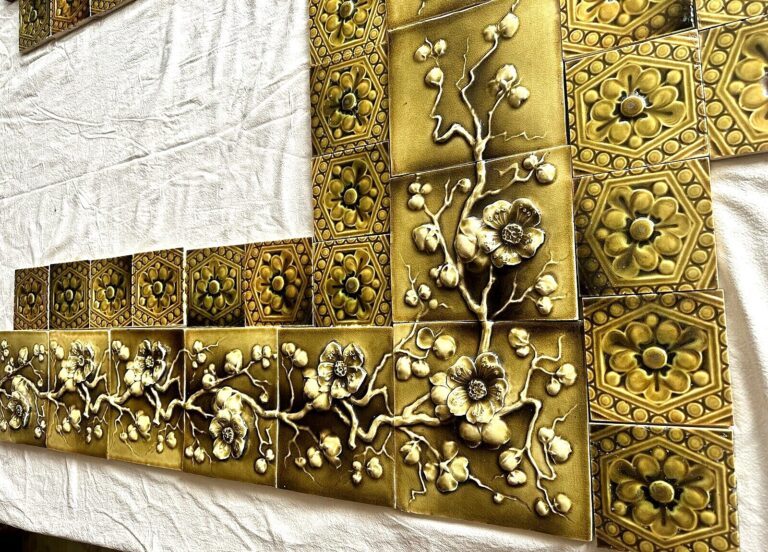
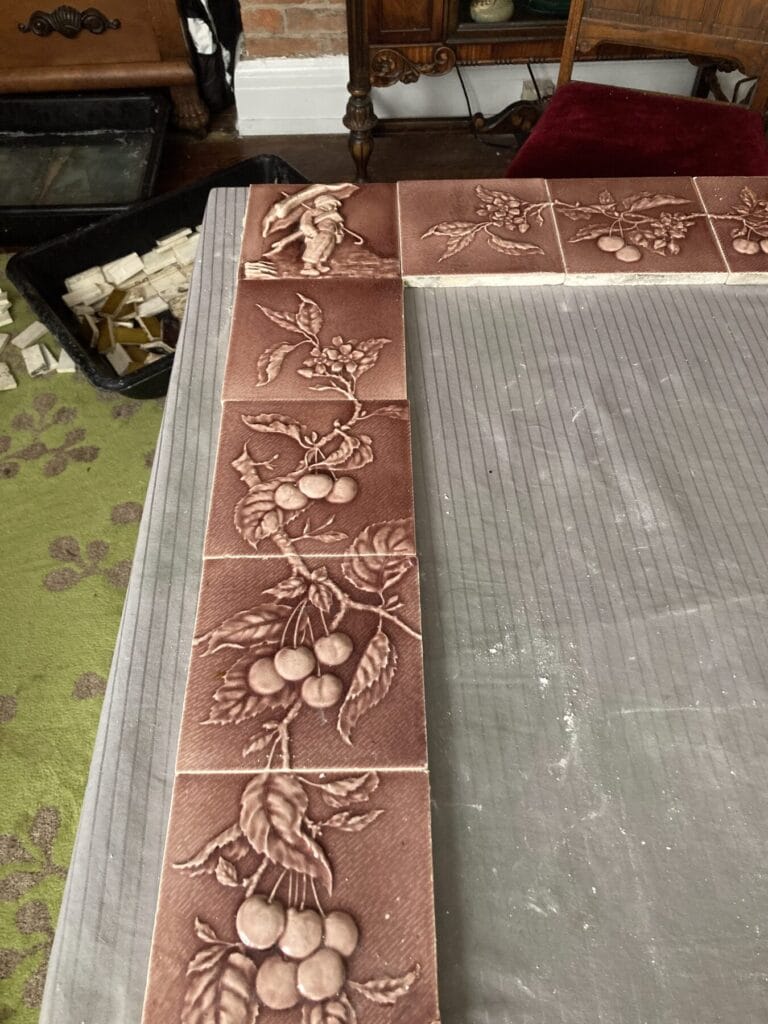
An English sculptor from Faversham, Osborne joined the J. & J.G. Low Art Tile Works in Chelsea, Massachusetts around 1879 and modeled the great majority of its tiles — including the celebrated “plastic sketches” meant to be framed and hung. His mark, an A in a circle, is worked into the design. When he finally returned to England in 1898 he took the craft with him, producing his molded “Ivorex” plaques for decades. His work is why a Low tile still stops a collector mid-step. See the Apple Blossom →
Herman Carl Mueller — the modeler who kept moving
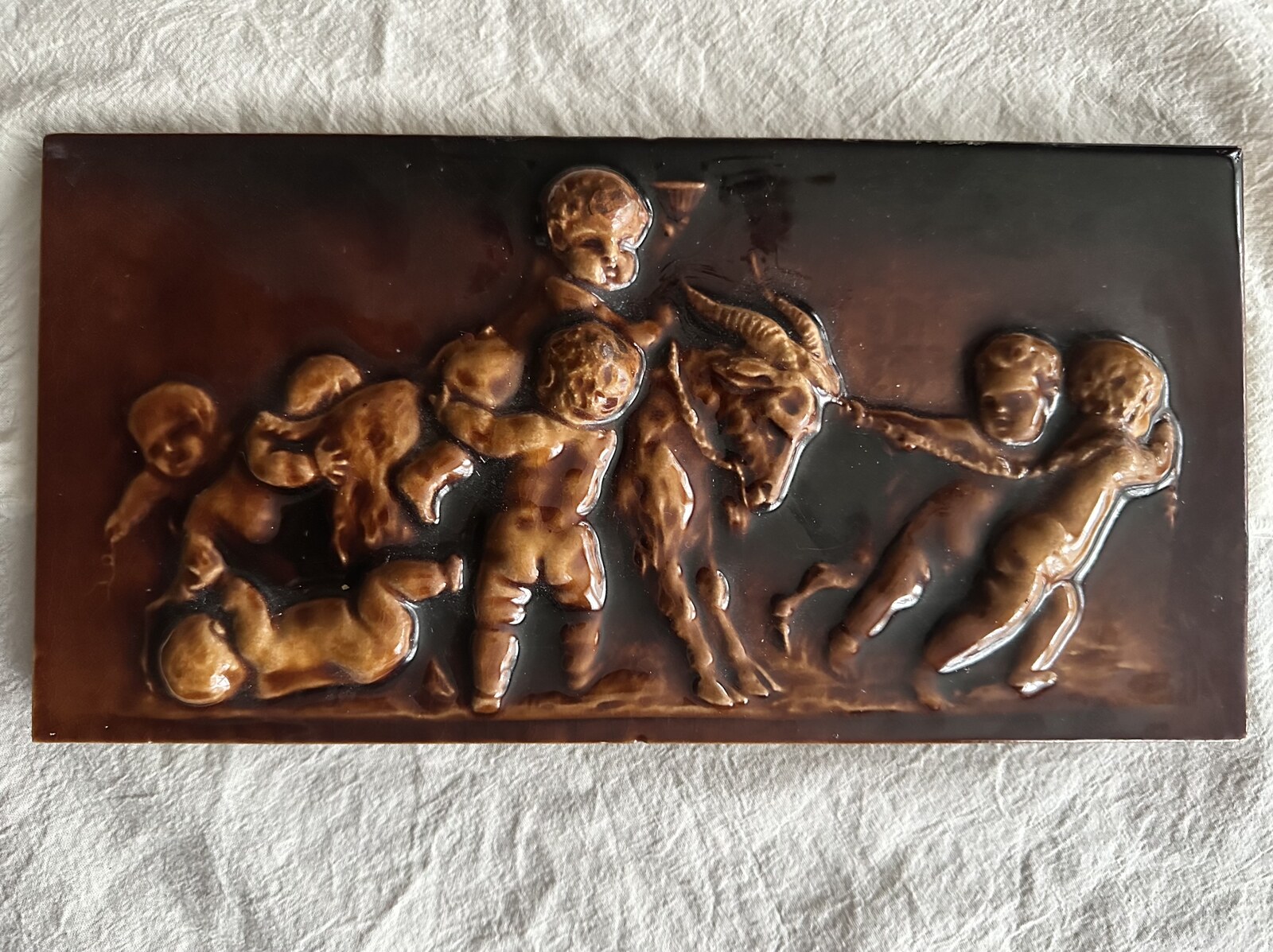
No one embodies the wandering modeler better than Herman Carl Mueller. German-trained, he modeled the finest figural relief at the American Encaustic Tiling Company in the years around 1887–1894 — work attributed to him includes the Kensington lady-and-hounds relief and grand AETCo surrounds. Then, with the chemist Karl Langenbeck, he left to found the Mosaic Tile Company — and later left that to start Mueller Mosaic in Trenton, New Jersey. Three companies, one hand; you meet his modeling across all of them.
Karl Bergmann — from Zanesville to Milwaukee
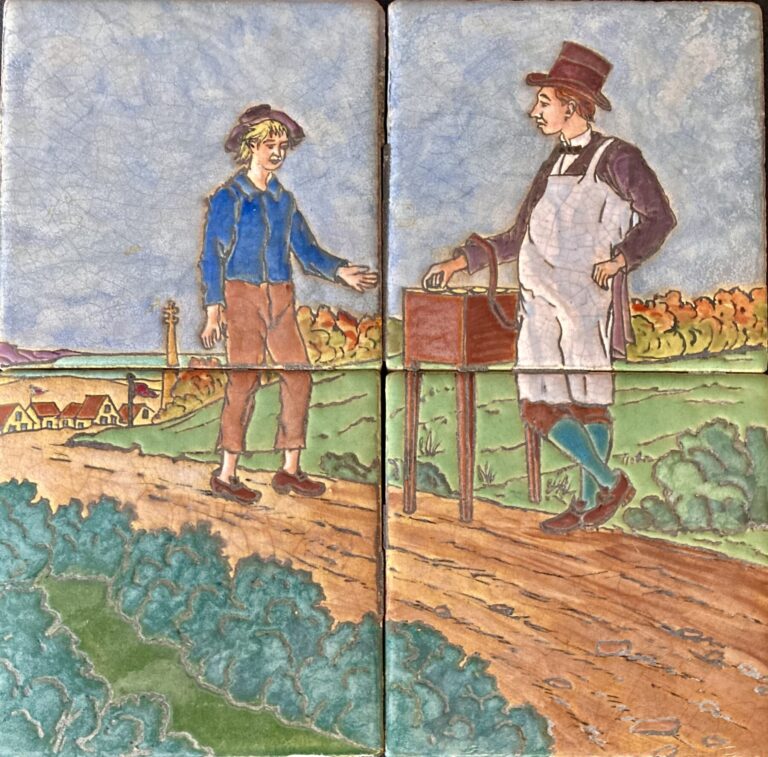
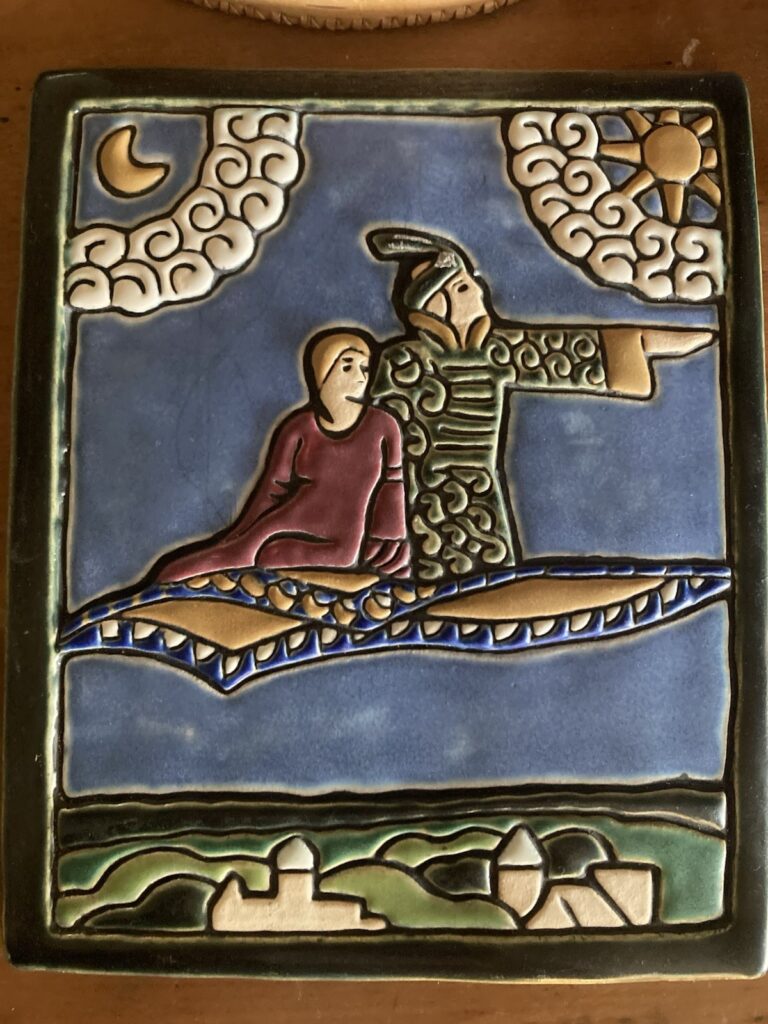
Brussels-trained, Karl Bergmann designed at the Mosaic Tile Company and then American Encaustic before founding his own Continental Faience and Tile Company in Milwaukee. It is his world that the hand-painted nursery-rhyme faience tiles belong to — the storybook scenes that turned up in a Milwaukee schoolhouse. Read the Simple Simon story →
Grueby, Robertson & the Low alumni
The Low works was a nursery for the whole field. George W. Robertson, a glaze man there, left to found Robertson Art Tile in Morrisville, Pennsylvania, in 1890. William H. Grueby spent years at Low and then founded Grueby Pottery in 1894, giving the Arts & Crafts movement its famous matte “Grueby green.” The chemist Karl Langenbeck helped shape glaze science at AETCo and Mosaic both. And Frederick Hurten Rhead — later the designer of Fiesta ware — passed through AETCo and Mosaic on his own long road. Follow any one of them and you draw a line through half the great American potteries.
Why it matters when you hold a tile
Attribution, in this world, is often really about a person, not a plant. A glaze that shows up at two “different” companies may simply be the same chemist. A figure modeled with unusual life may be the same sculptor, one job later. Knowing who moved where turns a stack of anonymous tiles into a family tree — and makes a strong attribution possible even when the back is unmarked.
Relic Asylum — Tiles with past lives.