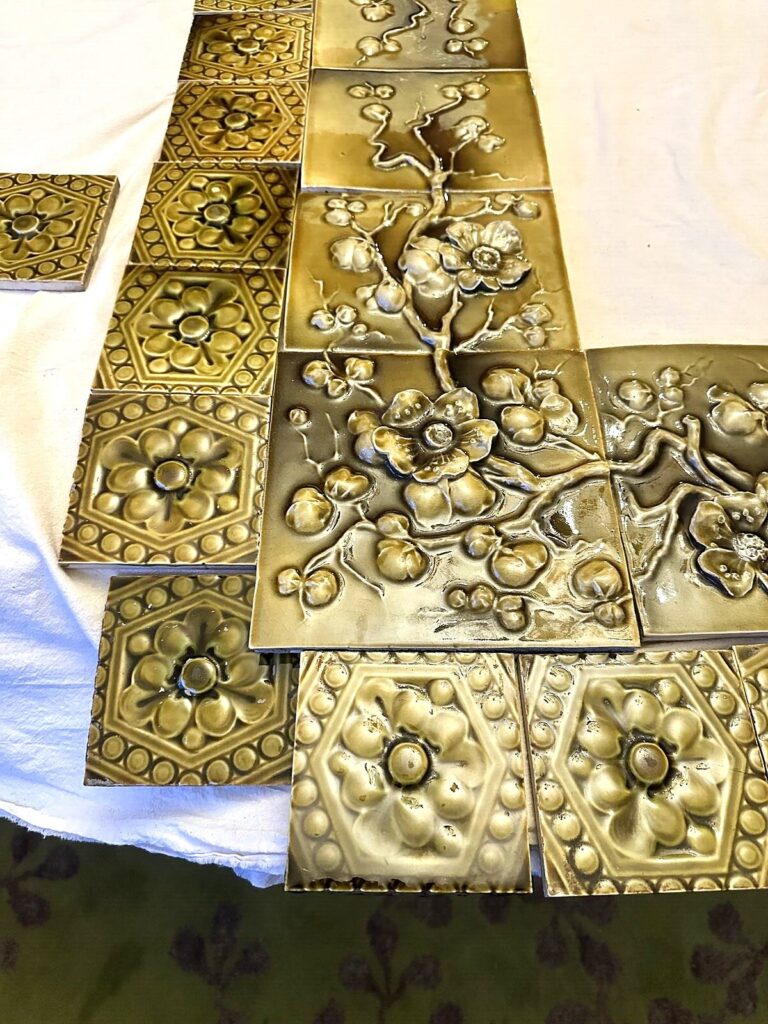
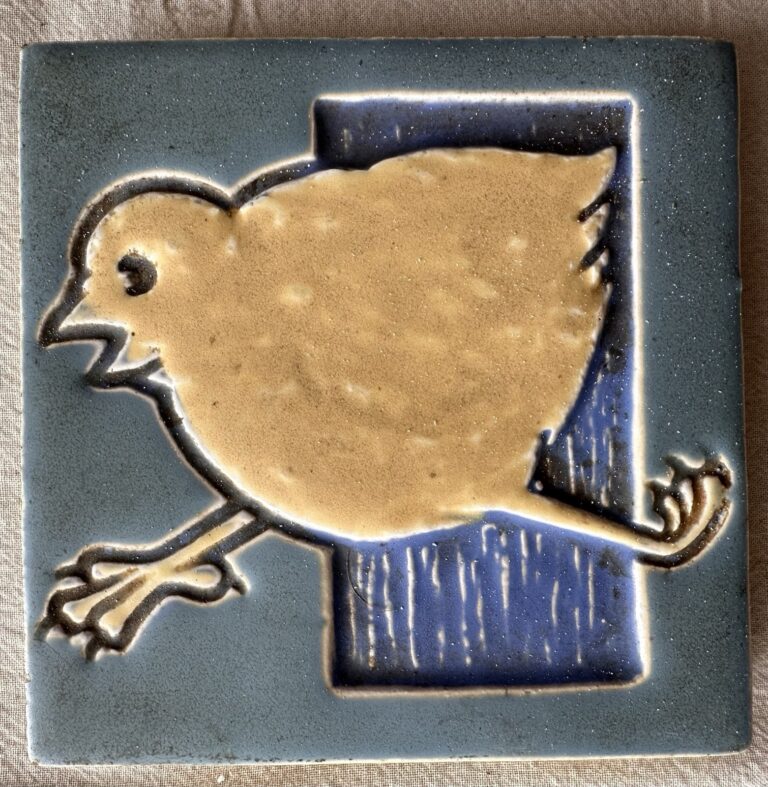
The Apple Blossom Fire Stove: A Low Art Stove Dragged Home
A parlor stove, faced in the apple-blossom art tiles of the Low works, found not in a parlor but in the wilderness — abandoned, rusting, its tiles cracked by cold and time. Getting it out meant dragging it across a frozen lake in the dead of a northern winter. This is the story of that stove, and of bringing it back.
Warmth that reminded them of home
In the Gilded Age, the men who made fortunes in the cities went north to hunt, and built lodges deep in country that had no parlors at all. What they carried in were the comforts of home — and few said “home” like an art-tile stove. The Low Art Tile Works of Chelsea, Massachusetts faced cast-iron heating stoves with its hand-modeled relief tiles, turning a utilitarian object into a small hearth-shrine of amber glaze and blossom. To set one in a hunting lodge was to bring a Boston parlor into the woods.
A family at Saint Edward’s
This stove came down from a family at Saint Edward’s, in Canada — believed to be its original owners. The family name matches the name tied to a Gilded-Age hunting property in the same country, which would place the stove with the people who first warmed their hands at it more than a century ago. When the lodge was let go, the stove was left behind in the wild, where it sat until it was hauled out across the ice.
On the bench
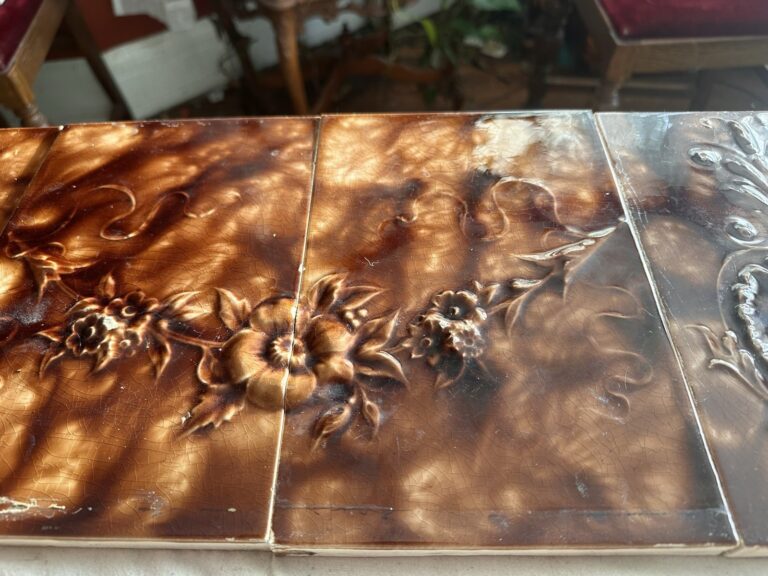
The winters that preserved it also marked it: several tiles cracked, and the iron carries a century of rust. The restoration now under way is slow, careful work — stabilizing and inpainting the damaged glaze to match the original rather than paint over it, and bringing the iron back without erasing its age. It is the kind of project that rewards patience, and it is being documented here from the bench as it happens, stage by stage, before the stove is whole again.
For the pottery behind the tiles, see J. & J.G. Low Art Tile Works in the Journal.
Relic Asylum — Tiles with past lives.